Wednesday, 30 August 2017

THE PROBLEM OF THE BRITISH SOUTHERN CAMEROONS: INDEPENDENCE OR FEDERATION?


Devoid of commitment into the theology of self-determination, the Church in my homeland would remain outside the world of our people…for the Church has to take its place at the creative centre of culture.  Gerald Jumbam

This essential duty of telling the truth makes the writing of History a thankless and even dangerous enterprise, especially if the Historian has to reveal unpleasant facts about people in high places – alive and powerful!  
                                       Bernard Fonlon in The Genuine intellectual


As the political fabrications, State fictions and lethal forgeries of La Republique du Cameroun’s (LRC)government on Southern Cameroon’s agony continue to infect media houses, it is perhaps more fitting than ever that we turn to something which has always demanded that we look more closely for the root of the Southern Cameroons problem. 


The high court of history is that thing. And therefore historical truth is widely reckoned to be the most powerful weapon against bloodsucking oppression and colonial propagandas – the type the Southern Cameroons is victim to in Africa, at the moment. It was the eminent German philosopher, Arthur Schopenhauer who said “All truth passes through three stages. First, it is ridiculed. Second, it is violently opposed. Third, it is accepted as being self-evident.” Theodore Herzl was laughed at when he conceived in 1896, the idea of a Jewish State. After a year, he challenged his enemies: “At Basel I found the Jewish State, If I said this out loud today, I would be answered by universal laughter. Perhaps in five years and certainly in fifty years, everyone will know it.” On May 14, 1948, exactly five decades after, the State of Israel came into existence. Today everyone recognizes it, and this is preeminently self-determination –the type that is gaining ground and taking root in the Southern Cameroons Ambazonia nowadays.


 I talk from – I must confess right away – the standpoint of son of one ageless institution called the Church. Each time a country is declared independent, each Pope earnestly cheers it. The Church believes in freedom from tyranny of browbeaten peoples. One cannot engage in matters of justice and peace and human dignity without involvement in self-determination, in the sovereignty of constituted peoples, and in the liberty of chained human beings.

Self-determination is hinged on the principle that man is born free.  That his dignity is inalienable. That man is pinnacle of civilization. That there is a Creator. That man is image and reflection of that Creator. That God communicates to everybody and that conscience is that medium which this Higher Power talks to us. 

The theology of Self-determination à la Gerald Jumbam rules out armed struggle and sees Mahatma Gandhi as the Morning Star. It believes that where there is truth the Holy Spirit blows and where the Spirit is, the impossible is enabled. It is hatched from God but takes flesh in man’s concreteness and daily doings.  It eggs on members to change political systems that unman, that enfeeble. It  believes in transforming structures rather than adopting colonial emasculating vestiges. It faces empire theology head-on and says No to its debilitating machinery. It believes that one culture is as good as another and so all of them must go through a self-purification when they meet God. It looks at banana republics as bastions of exploitation and is warrior against exploitation and dehumanization.  It is refuge of slaves and voice to the voiceless. It believes with Aristotle that action is the way forward in that “there is only one way to avoid criticism: do nothing, say nothing, and be nothing.” It believes in the relevance of history and holds that politics can only be service if its doings are connected to moral values and anthropological bearings. These root-elements are absolute kings in the life of each human person. Without these first principles, self-determination is completely misunderstood. 

The theology of self-determination therefore finds concrete expression in the flesh and bone of the ignominy of human suffering.
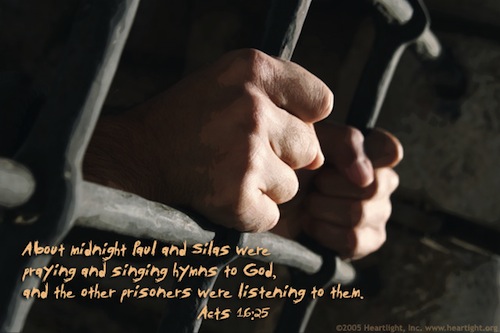
The victims of human calamity are the material of this creative theology. The Church faithful to her Incarnate Spouse Jesus would incarnate itself in the flesh and bone of our lives. She plays the role of whistle-blowing when tyrants strike the defenseless. She blows her whistle for non-violence by encouraging protest and moral defiance. Theology is either facing these particular practicalities and therefore at the very creative core of contemporary life or it is dead and buried. The one that flows in my blood and the veins of millions of British Southern Cameroonians today is theology of self-determination. Its dynamism in our hearts remind us of Pope Francis’ “the People of God is incarnate in the peoples of the earth.  Devoid of commitment into the theology of self-determination, the Church in my homeland would remain outside the world of our people. It would masturbate with irrelevant phenomena and be dumped in the trashcan of history.


Were we to follow the assessment of the diverse qualities involved in the theology of self-determination, we should find that they can all be totaled in the word ‘redemption’. The demand for redemption – in other words liberation – makes the self-determination theologian uncomfortable with narcissistic givens that allow millions of poor miserable people wallow in yokes of oppression and wickedness. This brings the Church to the market place. For the Church has to take its place at the creative centre of culture for “each people is the creator of their own culture and the protagonist of their own history”[2] and therefore any God-oriented theology must return to and respect the people’s anthropology and the people’s history. 
How does one begin to slash through this medley of connected matters of self-determination’s theology in an embattled context like the British Southern Cameroons? History bears us witness and furnishes tangible facts. It was Eduardo Galeano who said: “History never really says goodbye. History says, ‘see you later’”. The powerful rise today of the feeling of independence that has invaded the hearts and minds of British Southern Cameroonians testify to the relevance of Eduardo Galeano’s words above. The proof of this on the case of the British Southern Cameroons nationalism is the burden of this write-up.

British and French Cultures: Essentially different Worldviews 

Since we live in times in which silence is not only immoral but dangerous, to have full knowledge of the tricks and intrigues surrounding the independence of the British Southern Cameroons, is the most important thing to do now. To know this, it is vital to delve into the history of Cameroon itself. Before 1914, Cameroon including Northern Cameroon that is now part of Nigeria was ruled by the Germans as one country. When the First World War broke out in 1914, France and Britain in other to cut off supplies coming from German colonies to help the German war machine in Europe, attacked Cameroon. The British led by General Charles Dobell attacked Germans in Cameroon from the West and the North while the French under General Joseph Aymerich attacked from the East and South.  In 1916 the battle of Mora sanctioned the complete conquest of German Cameroon by the French and British forces.
Between 1914 and 1916, Britain and France attempted to jointly rule the territory of the Cameroons in a system of administration which has gone down into history as the Condominium. In spite of the efforts at joint administration, the British and French realized that their cultures and worldviews were essentially different and that try as they could, French and British cultures could never peacefully live together in one territory. Seeing how General Charles Dobell and the British were behaving as if they were the sole rulers of Cameroon and seeing that the French were playing only second fiddle in administrative matters, the French administrator Picot suggested that German Cameroon should be partitioned into two, so that, each foreign power could rule its own part of Cameroon independently of the other.
For this purpose, a conference of French and British diplomats was convened in London in 1916 and by the London Agreement in 1916, Britain and France formally debated and agreed upon the temporary partition of Cameroon into French Cameroon and British Cameroon, along what became known as the Picot Line.
By this partition, Britain received roughly one-fifth of German Cameroon while France received about four-fifth of the territory. The main reason for this unequal sharing of Cameroon between Britain and France was that France argued that Britain had already conquered and taken German Tanganyika alone and could not therefore expect to get an equal share of Cameroon with France which had no share of Tanganyika.


Cameroon is Permanently Partitioned

When the First World War came to an end in 1918, the world powers convened a conference in Paris and its environs to attempt to redress the problem that had been created by the war. At the Paris Peace Conference of 1919, the world powers asked Britain and France to decide what should be done to the territory of German Cameroon which they had conquered during war. To meet the request of the world powers, British and French foreign ministers met in a small conference of their own to decide the future of German Cameroon. The final resolution of this get-together known as the Milner-Simon Agreement of 1919 was that the temporary partition of German Cameroon into French Cameroon and British Cameroon along the Picot-Line should become a permanent partition. To reinforce this permanent partition of Cameroon into French Cameroon and British Cameroon, customs officers of the two foreign powers were jointly placed along the Picot-Line. Hence you had customs offices at Munyah after Kutupit, at Santa in Bamenda, and at Fontem in Lebialem. In fact an international boundary was created between French and British Cameroon and Britain actually began building concrete pillars from the coastal South West region of Cameroon to mark the new international status of the British Cameroons.

And it is very clear that you do not have joint custom officers operating within the same country, but they operate only on the boundaries between one country and another.

That is why when the League of Nations was created, the British Cameroons was admitted on July 20 1922 as a completely separate mandate of the League: separate, that is, from the French Cameroon mandate. The two independent territories assumed the character of two different nations. And they were acknowledged as Mandate “B” Territories of the League of Nations Mandate Commission at Geneva in Switzerland. In the language of the Paris Peace Conference of 1919, a Mandate was a territory that was either ripe for independence or was being prepared for its independence. In the conference of 1919, only some territories in the Middle East qualified as Mandate “A” Territories and were immediately given their independence. 


No African country in 1919 qualified for immediate independence, in spite of the Pan-Africanist struggle of Dr. WEB DuBois. But by this arrangement, the British Cameroons was named a Mandate “B” Territory, that is, a territory whose independence could come in the foreseeable future. French Cameroon also received the status of a Mandate “B” Territory and was ruled, guided and given its independence by France in 1st January 1960. 

The British Colonial Mischief

Now instead of the British guiding and preparing their own territory for independence as they were supposed to have done, they tried to do everything in their power to bar the British Cameroons from achieving independence, as had been expected when the League named Britain as the Mandatory Power of the British Cameroons. In fact knowing fully well that independence went along with education, the British Government throughout its stay in the British Cameroons from 1914 to 1961 never established even a single secondary school in the territory. The only effort at secondary education was undertaken solely by the Catholics and the Protestants. 

In the British Northern Cameroons, primary schools were very few and far between, and in many areas in the North, schools were completely inexistent. The highest level of education anybody in the British Cameroons could therefore dream of attaining was the First School Leaving Certificate and even those who had it could be counted on your finger tips. 


That is why when the United Nations Organization (UNO)took over the affairs of the defunct League of Nations and promoted the British Cameroons to a Trust Territory, the British had nothing to show by way of preparation for the territory’s independence. In fact, almost all first generation British Cameroon politicians had nothing other than their First School Leaving Certificate to rely upon in matters of independence and State governance. See the Fonchas, the Munas, the Ngom Juas and the Mallam Abba Habibs. 

Conscious that it had failed in its duty to prepare the territory for its independence, the British spent useful time trying to dissuade the British Cameroon politicians from fighting for their independence. One of the false arguments used by the British to scare British Cameroon politicians from the independence option was the lie that the new State would not be economically viable to stand on its own feet. The huge oil deposits in Limbe and Bakassi Peninsula today for example, have proven beyond doubt the falsity of this argument. Moreover, as the British did not create institutions of higher learning in the British Cameroons, they felt that the territory did not have well-trained personnel, that could run the different ministries in the event of the independence of the territory. The thousands of the British Cameroonians working internationally in such countries as Canada, Britain, USA, Belgium, South Africa and S. Korea show very clearly that the time for British Cameroon independence is long overdue. Finally America and Britain believed during the Cold War days that small states such as the British Cameroons could easily be overrun in the face of Communist expansion. But today Communism long collapsed in Russia in 1989 with the arrival of Glasnosts and Perestroika under Mikhail Gorbachev. What then can today stand in the way of the independence of the British Cameroons? Nothing.

Independence is Non-negotiable

We remember how at the Mamfe Conference of 1959, after the deadlock caused by Britain in the struggle to arrive at a consensus point for British Cameroon independence, Britain went ahead to connive with the UNO to impose a plebiscite on the British Cameroons on February 11 1961, in a territory where there was not supposed to be any plebiscite, but outright independence. A plebiscite is usually organized only in a territory where there is a mixed population as in the German Sudetenland in 1938. In the case of the British Cameroons, which nationalities were mixed with which? We were all one nationality – the British Cameroons, and consequently there was absolutely no need for any Plebiscite. What was absolutely necessary was the independence of the British Cameroons. And both Britain and the UN all knew this very well. Hence the Plebiscite question “Do you choose to gain independence by joining the Federal Republic of Nigeria or by joining the Republic of Cameroon”?

The point to note from this so-called Plebiscite question is that you do not become independent by becoming dependent on another territory. You become independent by being on your own, and by taking your own destiny into your own hands.

As we have seen, in their 47 years stay in Cameroon, the British never setup even one secondary school in the British Cameroons. Consequently, the people to whom the so-called Plebiscite question was asked could not reason out the fraud in the whole Plebiscite exercise. 

However one thing remains clear from the so-called Plebiscite question: “Do  you choose to gain independence” means that the UNO knew fully well that they were supposed to grant independence to the British Cameroons.


And that is what the people of the British Cameroons are today asking Britain and the UN to do. For is it not a shame that the UN should constitute itself into an instrument of fraud over the British Cameroons question? Is it not a shame that Britain that has protected human rights and liberties in other climes as in the Magna Carta and the Habeas Corpus should be found trying to suppress the right and liberty of its people whose care and protection she once promised to ensure and guarantee when she took up the Mandate of the British Cameroons in 1922?


UNO’s Task of Today

Believe it or not, therefore, there is today in Cameroon a British Southern Cameroon Problem. And this problem is simply the refusal by Britain ( the colonial master) and the UNO (the guarantor of world peace) to grant independence to a territory which was supposed to have its independence as other African countries were doing in the 1960s. 
If Tanganyika a former German territory and Mandated territory of the League under British rule was given its independence by Britain in 1961, what must have happened to Britain from equally granting independence to the British Cameroons which was also a former German territory and the Mandated Territory of the League of Nations under British rule? If the British Cameroons were not supposed to be independent, why then did France and the UNO go ahead to grant independence to the Trust territory of French Cameroon on 1st January 1960 without consulting British Cameroonians? The British Cameroons was therefore not part of French Cameroon independence and was supposed to rightfully as well have its own independence from Britain and the UNO.


In fact how cometh that Namibia which the world powers qualified as a Mandate “C” territory (i.e. a territory with remote chances of becoming independent) should come from behind and become independent while the British Cameroons that was called a Mandate “B” territory in 1919 by the world powers should still today be begging cap in hands for its rightful independence from the UNO?

Therefore if the UNO does not turn round and look at what is happening in the British Cameroons today, the UNO will be held responsible by future generations for the bloodshed that is looming in this area of Africa. And it is this habit of neglecting what the world calls little events which led to the outbreak of World War I when Archduke Francis Ferdinand was murdered at Sarajevo in 1914.

So this is the time for the UNO to step in and solve the problem she created in 1961, once and for all, in the interest of Africans and world peace.
 And nothing short of the independence of the British Cameroons can be the answer to the dangers looming in the horizon in this troubled West African region. Fortunately, political fraud can no longer do in the 21st century what it once did in this part of Africa in the middle of the 20th century.


In fact those misguided British Southern Cameroonians who are calling for a Two State Federation with La Republique du Cameroun(LRC)are those who foolishly but wholeheartedly accept the results of the so-called plebiscite of 1961. The independents/nationalists on the other hand are those who argue that the plebiscite of 1961 was a violation of the Milner-Simon Agreement of 1919 because the permanent partition of 1919 could not become a temporary partition in 1961. 
Whereas the plebiscite of 1961 was tele-guided by Britain to suit her whims and caprices, the Milner-Simon Agreement was ratified by Britain and France and endorsed by the world powers of the time: America, Germany, Austria, Hungary, Japan, Italy and South Africa, that is, by all the world leaders assembled at the Paris Peace Conference of 1919.

Indeed the South African president Jan Smuth was one of those who endorsed the Milner-Simon Agreement of 1919. Smuth actually went ahead and like Britain got the Mandate over the other German colony of German South West Africa (today Namibia). Is it any wonder then that South Africa has readily accommodated the Southern Cameroons Broadcasting Corporation (SCBC) in its territory?

This is so because the South Africans know the story of the British Cameroons from inside since the South African Government was actually one of those countries which in 1919 endorsed the Milner-Simon Agreement when both the United Nations Organization(UNO)  and African Union (AU) were not yet in existence. The story of the British Cameroons is obviously in the South African Government files of that time because South Africa got her independence from Britain in 1910 and in 1919 she was already nine years an independent country which had joined the Allied Powers to fight against Germany and the other central powers in World War I. 


The Time is Now

And therefore those who are still calling for a federation to LRC should stop it because when the facts of the  British Cameroons Question would be examined from official files, the federalists would be ashamed to learn that they have been stupidly backing the wrong horse. Historical facts indeed don’t lie. History has been a great tool at the service of truth as is steadily made evident through the clean lights it shines on the hopes and aspirations of each and every evolving community. This is true of Cameroon history which contrived a crossing of the paths of Britain and France. The crossing of these paths let their loud footprints on the memory of the French and the British Cameroons. Perhaps, the denial – by historical tricksters – to acknowledge these footmarks in our memory is the crowning problem of the British Southern Cameroons.
The truth is that he who is oppressed, but seeks not to have his oppression eliminated, is at once the most criminal and decadent of mortals. If at the same time, he is okay and contented, if he takes this satisfaction as normal, or is cheerful and thankful about so sorry a state, I have no word to depict so brainless a person. It is the great object of self-determination to be adversary to such tranquility, to establish the truth about the human being, to restore the dignity of our human person, to give head-aches to the oppressing bully, and to whistle-blow to the world that we are going to restore our independence come what may. The ratiocinative instinct of freedom fighting, the certitude that liberation is coming,  and the strong presentiment of a personal Higher Power that protects the just, is alive. The truth of Southern Cameroons independence soars in its majesty, far above the opinions of cock-and-bull stories. And those with eyes see victory coming.


By Fr. Gerald Jumbam


[1] POPE FRANCIS, Evangeli Gaudium, 115.                                                               
[2] POPE FRANCIS, Evangeli Gaudium, 122.

Thursday, 10 August 2017

THE PROBLEM OF SCHOOL ATTENDANCE IN THE BRITISH SOUTHERN CAMEROONS


The function of education is to teach one to think intensively and to think critically. Intelligence plus character - that is the goal of true education. Martin Luther King Jr.

The function of education is to teach one to think intensively and to think critically. Intelligence plus character - that is the goal of true education. Martin Luther King, Jr.
Read more at: https://www.brainyquote.com/quotes/quotes/m/martinluth402936.html?src=t_education

"Every day I leave my house...my family knows...for the past twenty years...when I leave my house I know I will not come back home. Every play I write, Any poem I write,  I write as if it is my last poem, as if it is my last book".       Bate Besong

The launching of the Independence Revolution of the Southern Cameroons has been like the umpire’s whistle blow for which Southern Cameroons’ freedom fighters have been waiting on the sports’ ground.  In one short generation a massive package of  new feeling has spiraled into being from all over the country and, for the first time since 56 years, the Southern Cameroons’ present generation begin to picture in their mind’s eye not some green-red-yellow thing, but have imbibed how to see a dove as symbol and heavenly blue and immaculate white as colors of their much esteemed nation. The enthusiasm that has stimulated this national feeling has been great indeed. I hate to make mysteries out of nothing, but I am seeing a new powerful nation state come to being. I say that the enemies of our progress should know that their obsession with seeing the burgeoning Southern Cameroons destroyed by all means possible is a big waste of time and akin to waiting for the ship at the airport. And therefore, like Dylan Thomas once said of writers, I say today that there is only one position for the Southern Cameroons’ freedom fighter anywhere; that is, upright. This upright position is the fruit of a self-determination that is legal, forthright and God-ordained. 

There comes a time when man must shy away from fear and speak out his mind for a generation and for institutions that he owes allegiance. My allegiance to the Church (as one of those institutions ) is allegiance to the truth and not to unreflective persons. Christ is truth and his Body is truth’s bulwark and dispenser. It is my contention that the Church (and not that of clericalism or that aligned to State power) has always been the staunchest defender of the Southern Cameroons’ culture and statehood; that the golden eras of the Southern Cameroons history have also been high tides of the Southern Cameroonian Church; and that the Southern Cameroons' nationalism only would become disordered and perverted when it strays from the guidance of the wisdom of the Beatitudes of Jesus Christ and that of the fear of the Lord. But confusion has visited the Body of Christ the Church today as a result of the problem of school attendance. While a majority of Church faithful are crying foul at the Church’s hierarchy for persisting to open school, some unknown people have engaged in burning parts of some schools. Because of the recent attacks on schools owned by the Church, it is not clear to the Church hierarchy in British Cameroons whether they should open their schools or not come September 2017. But as a son of the Church I would like to make my own statement about the prevailing situation and thus clarify the Church on this issue of school attendance. 

Will the Church Make or Mar?

When the Catholic Church in France stood in the way of the French Revolution of 1789, the French philosopher Voltaire said this of the Church: “Crush the infamous thing”. The Church in France by taking sides with the oppressor had made itself so unpopular with the French people to the extent that a moral and spiritual institution like the Church became ‘the infamous thing’. The peoples of the former colony of the British Cameroons are today asking for their freedom and independence just as the peoples of the French Cameroon had organized and fought for theirs.
If there is anything which Jesus Christ came into the world to fight for, it was for human freedom. Hear Him: “I have come that ye may have life and have it more abundantly”. If the Church is to remain faithful to her mission of saving life, she cannot be on the side of the oppressors of the human person. Man is made in the image of God and anybody who oppresses man is therefore oppressing God.
The attitude of Amadou Ahidjo and Paul Biya towards the peoples of the former colony of the British Cameroons have been consistently diabolic and has been recorded in the writings of such eminent Cameroonian Catholics as Bernard Nsokika Fonlon( The KNDP Memorandum of 1964, Will we Make or Mar) and Cardinal Christian Tumi (The Political Regimes of Amadou Ahidjo and Paul Biya, My Faith: A Cameroon to be Renewed). From the evidence provided by these two eminent Catholics, it is clear that in the struggle for the independence of the British Southern Cameroons, the Church cannot be neutral. She must be on the side of the suffering and oppressed people of the British Cameroons whose sudden clamor for independence and freedom is seriously turning world over the attention of freedom lovers, to this part of the world. 

The Catholic Church has taught dogma for centuries. But a profound study of this dogma reveals that it is a liberating and saving dogma. To be dogmatic on the side of evil and oppression cannot therefore be the right attitude of the Church. Already the Second Vatican Council by insisting on reforms in the Church gave the right attitude the Church hierarchy should adopt towards the so many changes that are taking place around us today. The Church’s social agenda proclaims human freedom and democracy by strongly opposing any encroachment on human dignity and freedom. The Catholic Church in the Bamenda Ecclesiastical Province should therefore desist from supporting the evil and oppressive regime of La Republique du Cameroun

The struggle to liberate a people has always been fought around the issue of education.

It is the enlightened minority that has always led the masses to freedom. Hence the growth of the Western school in Africa gave rise to the struggle for African freedom and independence. It is indeed around the Ngugi wa Thiongos, the Wole Soyinkas, the Leopold Sedar Senghors and the Denis Brutuses that African freedom was fought. 

That the freedom of the British Cameroons should today be fought around the issue of the school is a reflection of history. 

Why is it that LRC is insisting that schools in the British Cameroons should reopen? So that they may continue to destroy the young minds of our children in their so-called schools. What is today called schools in the British Cameroons is a destruction machine put in place by our enemies from LRC. When the British ruled here, the school system produced the likes of Bernard Nsokika Fonlon, Kitts Mbeboh, Bate Besong, Siga Asanga, Kenjo Jumbam, Asonganyi, Ngoh Nkwain, Charly Ndichie, Bole Butake, Augustine Ngom Jua and Albert Mukong. All these were systematically targeted and killed or silenced by the evil regimes in LRC. 

To what kind of schools then do we want our children to return to? Is it not a wise act to call the attention of the world to the horrible situation in the British Cameroons by keeping our children at home? Is it not proper that we should let the world know that the Ahidjo and Biya regimes have killed all the leading Anglophone intellectuals in Cameroon? And the worst of all after completing the so-called schools, how many of our children are ever employed? Why are our children, in desperate need of jobs, pushed to have sex with dogs and serpents in Kuwait while Francophones are feasting themselves fat on SONARA oil in Limbe?

Our children today are distressingly immoral and the situation is becoming even more alarming. Which school system is producing these reprobates if not of the school system that our Bishops are calling upon our children to return to? Are marks not bought and sold in our schools today? Are examinations questions not made known to the children of the high and the mighty before examinations are written? Do our so-called teachers not transmit marks sexually to our female students? Is mediocrity not rewarded and excellence punished in our school systems today? Is immorality such an important component of our school’s curriculum today that we are unable to see the colossal damage we are doing to the Southern Cameroon youth of today? The answers to these questions are blowing in the wind. 

Our school system in the British Cameroons is so sick that one cannot but take sides with the School Revolution occasioned by the irrepressible Tassang Wilfred and his colleagues Teachers’ Trade Union. To do otherwise would be to sell one’s conscience for a cup of garri

The Murder Machine

As a teacher of divine mysteries, I am most partial to education. There is, however, one type of education I would rather the world had never known. It is the assimilationist murder machine French Cameroon has hung on the neck of the peoples of the British Southern Cameroons for decades. It ranks in my mind as one of the most miserable, most morally enfeebling learning processes known to the world.
The metaphor of Mandela is a  fitting one on explaining the narrative going on about school reopening. So much has been said about this proud son of Africa that my voice would seem to be hard of hearing. Yet, I know I know something of what Mandela represented to his South African people that I do not need to be deceived or distracted by voices that are shallow about the Mandela figure. "Education is the most powerful weapon which you can use to change the world”, are his most famous words on education. We will do well to recall the noble words of Nelson Mandela on education and the context they took in addressing the predicament of South African scholarship. There is time for everything. Therefore let it be known that those words came not from the Mandela of prison cells or from the Mandela of 1990. It was Mandela the president. He had achieved the grossest of all human rights – freedom from tyranny. Then classroom education could come now since they already educated themselves in freedom fighting: of the importance of man’s independence, of the importance of the human person and of the importnace of human dignity. Seek you first the Kingdom of Freedom from Tyranny and all other human rights would be added onto you. Wherever tyranny is so cruel as is in Southern Cameroon, life is threatened; and the right to life is the greatest of all rights. This because without the right to life the talk about education, classroom etc. is meaningless. 

Mandela’s words come in the context of a world that had manifold challenges and that required a modeled excellent tool to answer the multifaceted questions of the African struggle after independence. Mandela as president singled out education, and rightly so. Change in our communities would only come through educated men and women. Yet looking at Mandela’s quotation from another Christian point of view I say that it doesn’t say all that needs be said. Look at the political kleptocrats, the financial thugs, the cabal that rule LRC – these are all men and women with what we call education.  Yet they are a disgrace to those they govern, to our continent. So the most powerful thing in the world, to us believers, is a person. It is Jesus Christ. It is his Gospel; for “the mystery of our religion is very deep indeed: He was made visible in the flesh, justified in the Spirit, seen by angels, proclaimed to the gentiles, believed in throughout the world, taken up in glory. (I Tim. 3:16). Having an educated person without the wisdom that comes from God, from Allah, from Jehovah, is a waste of resources. Men and women need to be educated alright, but that education must build the moral and spiritual foundations of the peoples – and we know very well that there are many educated swindlers and tyrants out there.  So if you ask me, I will rephrase Mandela’s words thus: ‘Education is one of the powerful weapons which can change the world, but the Gospel is the most powerful’.

Indeed, freedom fighters and human right activists are the greatest educationists of the world. They are because they are experts in humanity, they are because they teach us what man is, what he is capable of.
They teach the world the worth of human flourishing. They teach us the inalienable rights of man, they bring us to the knowledge of the infallible truths of life. The freedom fighter’s main weapon is education. And let me be clear about this: our sons and daughters within these months of struggle have had an education like never had in the history of the Southern Cameroons – the education of the worth of the human person, the education of knowing their rights, the education of living by the Law, the education to freedom fighting, the education of standing strong against injustice and oppression, the education to autonomy and sovereignty, the education of seeing their parents beaten, humiliated, abducted and imprisoned and their indomitable spirit to fight back. That is education of the highest worth – education to virility. These are things they have heard happen in South Africa. They are witnesses to them today in their own land. And therefore our children are in school. They have never stopped going to school. The classroom has changed from colonial emasculating classrooms to decolonizing classrooms building courageous citizenry. And therefore when the Bishops of the Southern Cameroons quote the Second Vatican Council with the benign words on education, they are right. They are right that we would not stop at just classroom talk, we would go after education that mans, education that emboldens, education that speaks of the divine attributes of Truth, Justice, Love, Faith, Hope and Human Dignity. The Church has never stopped teaching these things in pulpits and the personal example of Saints. They have never stopped going to school. So let us give a break to this colonial nonsense called classroom education from LRC's homicidal education, this murder machine that has assassinated all godly principles in our hearts. I am virulent in denunciation of this murder machine and of celebrating its FINAL FULL-STOP in our land. Let us look up to real things, to real education for our children – and that would come from us, from our kind, from our educated men and woman and not some half-baked nonsense from Francophone forged fries. 

The Conviction of your Independence

The constant seeking of a balance between independence and liberty from tyranny has been the Southern Cameroons freedom fighter’s unavoidable burden and boon. One suspects that to them, independence means courage and responsibility. It means doing things not monitored by fear, but out of conviction. Man’s sense of integrity is noticed when fear has no space in his heart. Little wonder that Peter affirms: “I saw the Lord before me always, for with him at my right hand nothing can shake me.” (Acts 2:14,22-33). This is the conviction of a freedom fighter. Independence  does not question. It does not say, why? Any such skepticism is betrayal. The Questioning is somebody who is still disbelieving and cynical.

Disbelief is the biggest obstacle of a liberation movement. 

It is not a bad thing as such to ask questions, nor to seek to be clarified. But such questions should take the name of examination and not questioning. In fact we cannot without silliness call ourselves at once examiners and skeptics. Those who believe for example that the independence of the Southern Cameroons looms large and seek to be clarified on some things are examiners into that cause.  Some people have denied within them the truth of independence before questioning it. Their questions are clouded with dark clouds, clouds that are impossible to disappear because they are stubborn on their stand. I therefore hold that a true Southern Cameroonian is either penetrated into the truth about his sovereignty or he is not. He is allowed to examine, and he is fake if he examines by questioning the country’s autonomy. The assent to the idea of sovereignty becomes a conviction, a belief. It fires the soul. It entices feeling. It warms our hearts. It enlightens the mind. It emboldens the will. This is conviction  – conviction in the sovereignty of a constituted people. When I see my fears starve to death, that moment I have unbending conviction.

Conviction is saying stop to worries.
Conviction is not success. It is the power to fail without losing the ground under your feet. Conviction is a stonework of a wall against the flood waters of despair.  Conviction is accepting I can’t control everything – that I can throw myself on Someone’s shoulders and say take it all. It is God’s whisper to man to the effect that he is there for him. It is the moment you say with saint Paul I can do everything through Christ who strengthens me. No matter how much your soul is shattered, you will not surrender. 

Conviction tolerates what is, conviction is uncomplaining in moments of teething trial, conviction throws itself completely in the hands not only of the future, but on to God. The resurrection message to the apostle was ‘peace’, ‘peace I give to you’. And next to peace, was: ‘fear not’. When we believe God, he puts his peace in our hearts. And it is the only one thing – God – that remains when conviction looses friends and popularity.  God.

Priest and Patriot

I believe in standing up to tormentors. I speak because the assault has crossed my personal line. I am a priest of the Kumbo Diocese in the Ecclesiastical Province of Bamenda. I was raised up, thanks alone to the sweat and suffering of the English speaking peoples of Cameroon. And as Christ says in the Holy Scriptures, “To whom much has been given, from him much shall be expected”. It is therefore but logical that people of the British Southern Cameroons should expect me to tender an account of the education they gave me. To do thus, I must defend to the last of my energy the Anglo-Saxon school system which brought me up; a school system which is under full threat of destruction by the evil regime in LRC. It is to this call that I am now responding and let every man in the British Cameroons be responsible for the health of his own conscience. 

And that brings me back to the question which has haunted Cardinal Tumi throughout his life: Should a priest be concerned with the political life around him?
Cardinal Tumi has said in his work The Political Regime of Amadou Ahidjo and Paul Biya that a priest is first and foremost a citizen of his country and must vote in elections as a sign that he is a politically responsible being. A priest cannot vote responsibly if he doesn’t take enough interest in the political life of his country, the Cardinal argues. As a theologian I would say that this is sound moral theology today. 

Now, has a priest the right to fight for the freedom of his country? Can a priest be a political nationalist? Church hierarchy in the two English speaking regions of Cameroon would strongly hesitate to give an answer; but the most dogmatic among them would not hesitate to say: “No, he should not”.  One of the greatest mistakes that the early missionaries did was to always identify themselves with the colonial master. For this reason, the first African nationalists tended to believe that the Church was a hidden or spiritual arm of colonialism. Today in independent Africa, this belief ought to be abandoned because the mission of the Church and the State are not the same. Politics and spirituality are not the same fields of study although there are points of intersection. 

Gauging the Political Temperature

To continue to support the neocolonial political structure put in place by the colonial masters who were obviously enemies of African freedom cannot be the right posture for the post-colonial Church in Africa. 

As for me who is seeing very clearly today the injustice done by Great Britain to the peoples of the British Cameroons, I have a great duty to fight for the freedom of my people. It is obvious that if reunification were an issue in the British Cameroons question, the UN and France would not have gone ahead to grant independence to the French Cameroons on 1st January 1960. By so doing the UN and Britain showed clearly that they had a clear duty to grant independence to the British Cameroons. Hence the prefacing of the Plebiscite question “do you choose to gain independence by joining …”. This means that both the UN and Britain knew very well that the British Cameroons was supposed to be independent. 

It is this independence that I am bent on fighting for, and it is this that all British Cameroonians should fight for.
This fight has already started on the right battle ground: the School. And anyone who chooses to send his child to the warfront of the school should expect his child to be knocked down by the hot exchange of mortar and artillery. 

For let me tell you that the situation in English speaking Cameroon has become so tense that if the present provocations by LRC are not halted, war will become the only way out of the present dilemma. And in a war theater there will be no place for schools. Are the bishops who are calling for a return to schools actually gauging the political temperature in the British Cameroons? Will any of these bishops have a child to lose in the event of an attack on a school? 

My dear parents, why did schools close up prematurely last academic year? It was because the bishops, the pastors and principals could no longer guarantee in the school milieu safety and security for our children. Are we sure that social tension has not increased with the donkey intransigence of the Government of LRC and its refusal to dialogue with the teachers and solve the educational problems created by the regimes in Yaoundé? And do you think, my dear parents, that the resultant social tension is an appropriate environment for learning? Let us not fool ourselves. Since 1961 LRC and its hoard of gendarmes have shown that dialogue is not a word in their vocabulary and that they would stop at nothing to oppress and torture the peoples of the British Southern Cameroons. They have militarised our land, our schools, our everything and want to fight against defenceless civilians with artillery. We the British Southern Cameroonian civilians are so civilised we would not fight back with your own weapon. We would do the fighting with civil-disobedience, with ghost-town, with moral defiance, with non-violence. We shall not join you in your normal vandalism in towns and villages.

Our New Name

I have recently defined my destiny and spelt it its proper name. The brutal thought comes and quickens the desire to want to free yourself from their contemptible yoke. It comes from the tremors of learning that the country where your native land is found and the land you owe your being and name has not in its whole structure of actuality fashioned any space for you. 

One of the key qualities of sovereignty is the ability to spell your proper name, to tell your own story and decide your destiny. We traded our true name and took over something that caged us for 56 years. They did to us what Tortoise once did to other animals in the legendary story our old parents used to tell us around the fireside. It is the story of Tortoise and the Birds. The birds are invited for a great banquet in the Sky and Tortoise their friend convinces them to take him along. They first hesitated because they know how cunning, untrustworthy and covetous their friend the Tortoise is. Tortoise convinces them that he is a changed person, a born-again Tortoise. So the birds accept and decide to donate a feather each to help the Tortoise join them in the flight to the feast. They further fall for the Tortoise’s tale that it is a good thing to change names for such an important banquet. They birds have never heard such a thing, but see it as a wonderful idea. Each one takes a name. The birds carry very boastful and glorious names like ‘the elephant’, ‘queen of peace’, ‘Daughter of Zion’, ‘Star of the Sea’ etc. The tortoise declares his own name. It looks a very strange and unattractive name. He says he would like to be called during the party ‘You all’. The birds give it a laugh and congratulate themselves for taking such a comedian for a pleasure trip. When they arrive the venue of the feast in the Sky, and the people of the Sky present assorted dishes for the feast, he tortoise jumps up and asks the host: “who is this feast intended for?”
“You all of course”, replies the hosts. “You heard them,” says Tortoise to the birds. “the Feast is for me. My name is ‘You All’.
We are told the birds took their revenge by taking back their feathers and leaving the Tortoise high and dry in the Sky. But that does nothing to satisfy their hunger as they get back to the earth hungry.
The lesson, on our struggle, is clear: never again should we take a false name as we did during the 1961 and 1972, even when taking them in playfulness among ‘friends’ and ‘brothers’. 

Just like a plant must have the soil from which it grows, so also a culture must have a political framework within which it grows.
The destruction of the English State of West Cameroon in 1972 by LRC was therefore a destruction of the political framework within which an English culture could grow in Cameroon. Given the hostile attitude of the French imperialists towards Anglo-Saxon culture in Cameroon these past 56 years of the so-called Cameroon Reunification, it is clear that English culture in Cameroon is completely dead. And nobody can ever accept a political arrangement which leads to its own sterility or death. 

As  I see it, the independence of the British Southern Cameroons is an urgent necessity today. 

It is surprising that the other members of the British Commonwealth Organization could accept a political arrangement which leads to the death of English culture in any part of the world. Conclusively, the membership of LRC in the Commonwealth should be terminated because she cannot be bent on the destruction of English culture in Cameroon and still lay claim to its membership of the Commonwealth. For where are the English examinations today in Cameroon? Where is the City and Guilds? Where is the London Chamber of Commerce? Where are the RSA stages One and Two? The other members of the British Commonwealth should follow the example of South Africa which now houses the Southern Cameroons Broadcasting Corporation (SCBC) and press for the independence of the British Cameroons. 

We Shall Fight with Gandhi and King

The time to fight has come, and this fighting will not be done while our children are wangling their way through bullets and tear gas from LRC's lawless military on the children's way to school.
The battle is on. It must be fought to the end. The necessary tools for this war are Gandhi and Martin Luther King Jr. for a remodeling of our national moral character. Our people have suffered under LRC's despicable militarisation of their space. Ten thousand offences are punishable with imprisonment – marching in protest, civil disobedience, speaking your mind, stealing a guava fruit; and after all the excesses of the banana republic at home - the seas of blood they have spilt, the rapist soldiers of state - the fomented prejudice and jealousies over its citizens are merely argued away and nothing is done. We shall not retaliate with violence. We shall humiliate them with love, with protest, with defiance. As long as the Southern Cameroons is in chains, the only commendable position for the Southern Cameroonian men and women is the position of rebellion. This because the most honorable option relevant to good and wise men in the face of outrageous evil of such ethical proportions in Cameroon, is non-violent rebellion and civil-disobedience.

Genuine Nationalism is Holiness

Restoration of independence is not new wine in the Catholic Church’s cup. The Vatican State itself is the paradigm par excellence. Remember, the Papal states had lost all their lands in 1870 as a result of the unification of Italy.
But thanks to the spirit of self-determination that grew in the hearts and minds of some brilliant Cardinals and bishops especially under the auspices of Cardinal Pietro Gasparri and Pope Pius XII, the clamor for Vatican’s independence became muscular. Mussolini had no alternative in the face of these uncompromising prelates. He bowed to them.  Because of this inflexible determination for sovereignty, the Vatican  did not only retain the autonomy of the present Vatican land; it also received £30 million in compensation for lost lands and the Pope was also given a State retreat house called Castel Gandolfo.[1]
 
The Vatican city is country located within the capital (Rome) of another country (Italy).  It has its sovereign rights and enjoys the autonomy enjoyed by sovereign nations. It has an area of approximately 44 hectares and a population of just about 1,000 inhabitants. It is the smallest nation in the world and its independence was hard fought, and restored in 1929 against the threatening clouds of Mussolini’s subjugation and political maneuvering.  So in 1928, the Christian Vatican Country stood in the same position the Southern Cameroons stands today. By the daring and the doing of Pope Pius XII the Vatican restored its independence in 1929 with the signing of the Lateran Treaty.  Thus the power of self-determination.

In another erstwhile development, precisely in the 19th century during the struggle for Italian unification and liberty, Rev. Fr. Vincenzo Gioberti did not hesitate to call upon the Pope to lead the Italians in their struggle for unity and freedom. In 1834 Rev. Gioberti wrote down his views for the liberation of Italy in a book entitled De Primato Morale del Civile degli Italiani. Fr. Giorberti worked alongside other Italian nationalists such as Manzoni, Mazzini, Garibaldi and Cavour for the liberation of the Italian people from foreign domination. 

Today as a Phd student on Moral Theology in Rome, I salute the memory of Rev. Fr. Gioberti whose attitude and activities clearly showed that there is no contradiction between the struggle to be free and the struggle to go to Heaven. 

Rightly understood, nationalism and the priesthood are not incompatible; for genuine nationalism is one of the surest roads to holiness and sainthood. If this were not so, why is it then that the Catholic Church in Tanzania is today calling for the canonization of their first president, Julius Nyerere, if not for his genuine nationalistic character and temperament?

Truly a genuine Christian is a genuine patriot and you cannot like Cardinal Tumi has done, act in a genuine Christian way without impacting on the nation's political scene.  Today, like Rev. Gioberti in 19th  century Italy, I am compelled to be on the side of my people of the British Southern Cameroons in their struggle for independence and freedom. 

So God help me to free my people of the British Southern Cameroons from the ugly claws of a flying and rampaging tyranny in LRC. 

By Fr. Gerald Jumbam 


[1] Cfr. Wikipedia

Friday, 28 July 2017

AN OPEN LETTER TO BOH HERBERT ON THE PLIGHT OF THE PEOPLE OF THE SOUTHERN CAMEROONS: HOMECOMING OR HOMEGOING?

Dear Mr. Boh Herbert,

I write you because you know it, you have it and you get it. I write you because you talk sense and you, like many, have suffered as a result of you stance. I write you because you have dared the structures of evil back home even in those dark early 1990s. I write you because you are the cream of investigative and genuine journalism in our native land. You have been the spokesman of our troubles and woes in recent times. Now it will be preposterous and officious in me to put myself forward as champion of anything in this struggle, but I know I have space on it because my family has suffered as a result since 1990. My father has been president of SCNC at the heart of the most hazardous portions of Southern Cameroon, Kumbo. My father was in exile in Nigeria in 1998. He left us for two years and we in the family suffered persecution. He was imprisoned last year in the Bamenda military prison, a man in his Seventies, and only came out by the mercies of the intervention of Christian Cardinal Tumi. His life is not safe at this moment as we pray for him. I am priest, but I know what is happening because I have been privileged to be groomed by a man who has been near these things for a very long time, a man who has suffered for our people. Yet my father is my father. I am me and I have my own way.